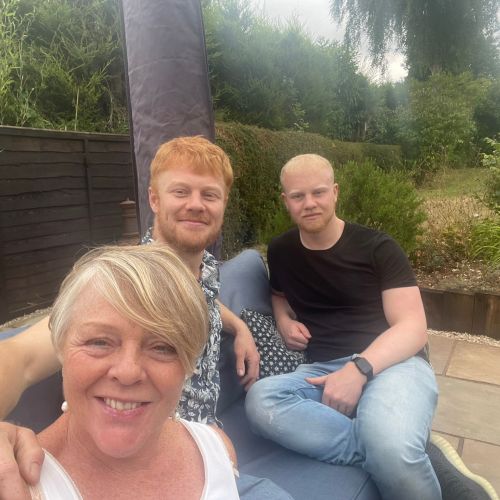
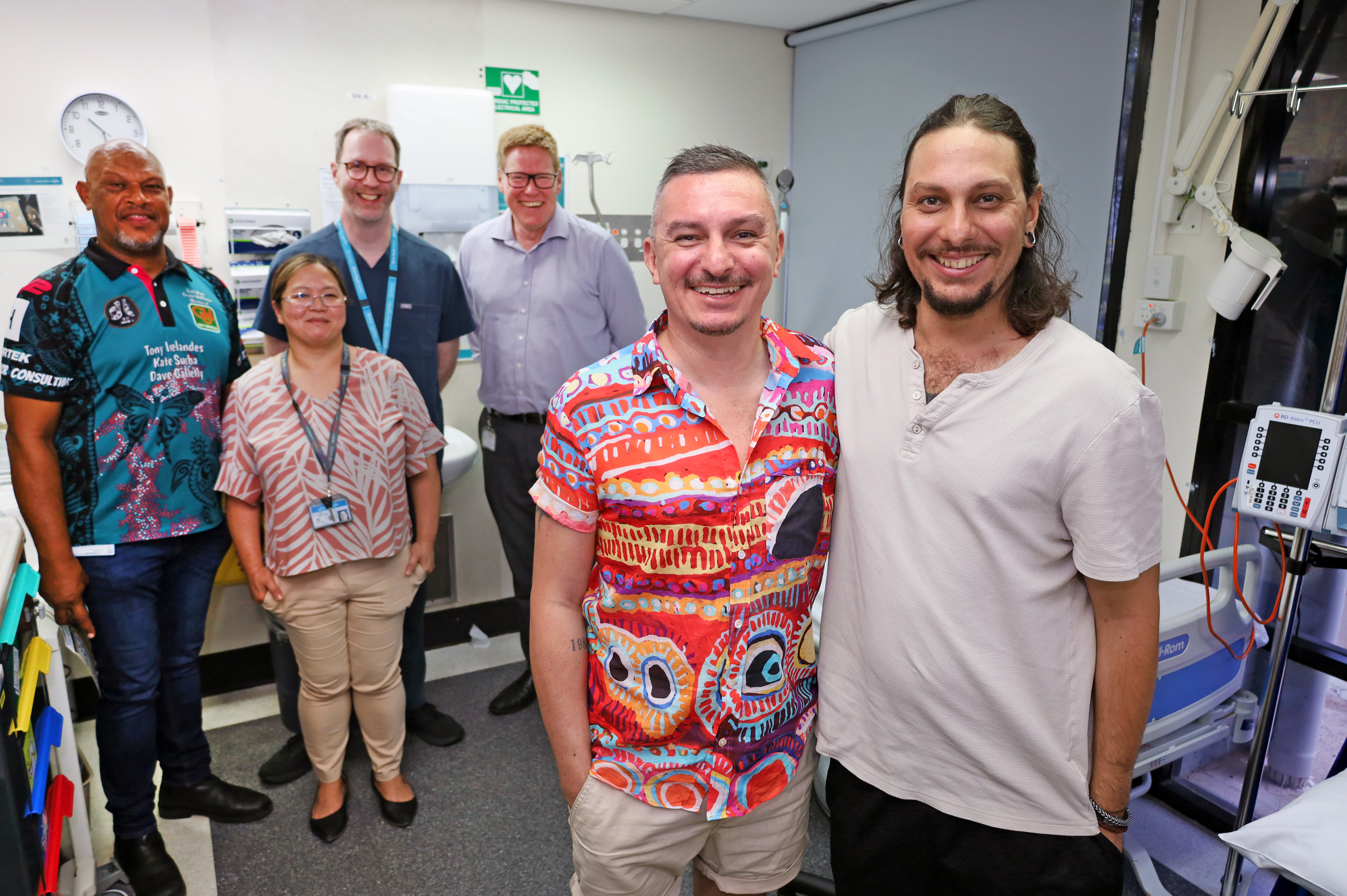
Sajarn has been busily catching up on his Christmas shopping list since a short admission at Princess Alexandra Hospital in November, but against his brother Codey’s name is a big green tick...
“I’m pretty sure the gift of life will see me through a few Christmases at least!”
Codey Stow (32) had a living donor kidney transplant, thanks to the remarkable gift from his brother in November, and is now experiencing life with a functional kidney and the warm glow of brotherly love that comes from knowing they are a perfect match.
Codey’s health started to decline in 2018 with headaches that indicated hypertension and further investigations identified kidney disease. He was diagnosed with IgA nephropathy, an inflammatory kidney disease that leads to chronic kidney disease or failure.
The land and sea ranger based in Gladstone found his home life with his young son interrupted alongside ongoing impacts to his work on the Bailai, Gurang, Gooreng Gooreng, and Taribelang Bunda lands.
“I commenced clinical workup in Gladstone to progress to peritoneal dialysis from home at the point my kidneys reached 10 per cent function,” Codey said. “We had a small reprieve when this jumped from 12 to 16 per cent function which allowed our family to have the important discussion about a living door transplant.”
Enter older brother Sajarn Stow who works for ABC radio in Darwin, and he was instantly agreeable. As luck would have it, he had been involved in many stories for the broadcaster about organ donation and his partner is also a nurse working for DonateLife in the Northern Territory.
“My brother needed help, and I didn’t even question it,” Sajarn said. “I had a goodbye kidney party, and the biggest surprise was that I was healthy enough to donate!
“There were a few nervous points for me throughout the process, the first of which was if we weren’t a match. It would have been heart-breaking, but it was a pivotal moment in this journey to receive the news that we were a perfect match.”
With Sajarn focussed on making good decisions for the health of his kidneys and Codey at top of mind throughout the time-consuming task of coordinating appointments and tests, awaiting confirmations between two states, Codey’s health continued to deteriorate while the clinical team worked to have everything ready for a living donor kidney transplant before Codey required dialysis.
Princess Alexandra Hospital Kidney Specialist, Associate Professor Ross Francis is also the Assistant Director Indigenous Affairs within Kidney & Transplant Services.
“For many patients with kidney failure, a kidney transplant offers significant improvements in quality of life and life expectancy compared to being on dialysis,” he said. “Research shows that the benefits are even greater if you are lucky enough to have a living donor and can receive a transplant before reaching the point that dialysis is necessary.
“In the past, very few Aboriginal or Torres Strait Islander people became kidney donors, but this is starting to change due to improved community awareness, and also because conversations about organ and tissue donation with First Nations people are now being conducted in a culturally safe manner by expert trained health professionals,” he said.
In the lead up to the surgery, Sajarn said the success of the operation for Codey weighed heavily on his mind.
“When I woke up, the doctors informed me that the kidney was already working producing urine and Codey hadn’t even got off the operating table yet. Mum and I started crying – to be so delighted about wee!
“Once it is done, you have the opportunity to look back on the journey and know you did your best for someone you love,” Sajarn said.
One month on, Codey feels a lot better, confirming it is hard to explain to people who don’t have kidney disease because it is such a slow progression that you don’t notice the change.
“You hit a point where you are exhausted and things clearly aren’t working the way they should, but you didn’t notice the decline,” he said three weeks after surgery.
“After the transplant when all your levels start coming up, you get your energy back and you recognise this is how it is supposed to be. The surgical recovery takes time, so it is hard to fully appreciate the benefits of a functioning kidney but the awareness of being healthier is profound. It’s the best gift I’ve ever received!”
Codey said The PAH nurses, pharmacists, doctors and surgeons were so caring and knowledgeable which made recovery so much better. He was also grateful for the cultural support he received during this journey from Kidney Indigenous Health Workers Brett and Annika.
His focus now is getting back home, taking care of country the best way he can, and managing life alongside a new regimen of medications to prevent the kidney from being rejected is the next priority.
Sajarn doesn’t think Codey will appreciate him using ‘the gift of life’ trump card for a Christmas gift every year….. but maybe he gets a pass for a few.
Foundation Support
Remarkable donors like you have helped us to fund research and patient support for kidney transplant patients for over a decade. Thanks to you we’ve funded research by the Australasian Kidney Trials Network and PA Hospital nephrology department and patient support projects for transplant patients across Queensland. You can donate to kidney research by the AKTN or the PA Hospital Nephrology Department here.
Donate life
We want all Australians to register as organ and tissue donors and be the reason someone else gets a second chance at life.
It only takes one minute to register as an organ and tissue donor at donatelife.gov.au or through your Medicare account. Then, tell your family you want to be a donor.
Join the register | DonateLife
Story courtesy of Metro South Health.