Against all odds
When death knocks on your door, you reflect, you rearrange your priorities and you recognise that it’s your loved ones that bring meaning to your life.
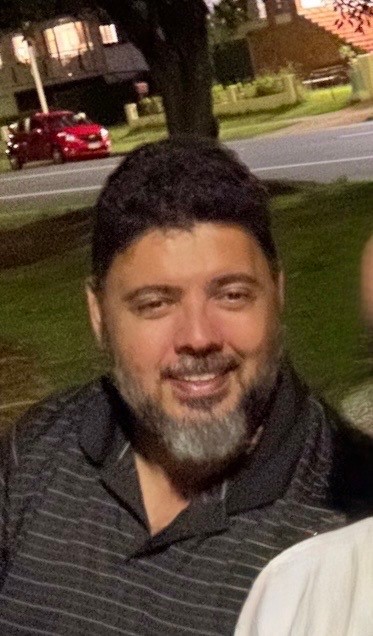
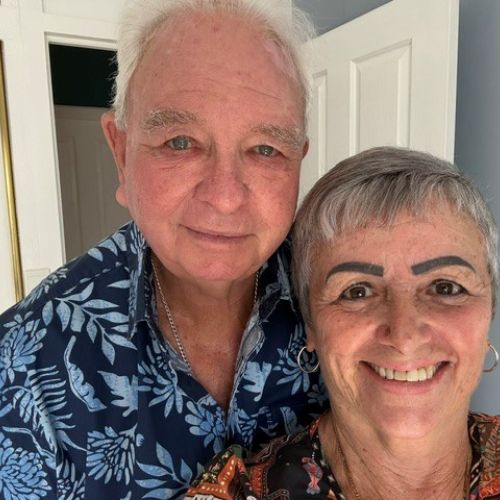
That’s exactly what Alfred Attard came to terms with when he was diagnosed in May 2024 with a terminal glioblastoma, an extremely aggressive grade 4 brain tumour.
Alfred Attard’s story is nothing short of miraculous. After losing his peripheral vision in his right eye, Alfred came into the care of the PA Hospital in 2024.
He was handed an almost guaranteed death sentence, given only 6 months to a year and a half to live. Alfred explained the odds he was given.
“They warned me that 50% of patients that have my condition, didn't survive because they did not respond to the treatments. The other 50% who did respond to the treatment, only responded between 5% and a 25% shrink or reduction of the tumour, and then they would die eventually” Alfred said.
Alfred began treatment immediately, undergoing chemotherapy and radiation. His treatment had extraordinary results, after six months the tumour had shrunk by 90% and by nine months it was completely gone. One year on, his magnetic resonance imagery (MRI) image once again came back clear.
When talking about his experience at the PA Hospital, Alfred had enormous praise for the people who cared for him.
“The PA Hospital was fantastic for me. Everyone was so compassionate. Oh my goodness.. I couldn't believe it was a public hospital. The care factor was incredible; it was so high. Everyone knew me and it was so good.”
Alfred’s faith played an immense part in getting him through this worrisome chapter of his life.
“I'm a man of faith. At that moment, I instantly felt a sudden rush of peace. In my heart, in my body, in my mind. This peace was a voice in my head saying, don't worry I've got you, don't worry, I'll take over from here. And that was God talking to me... I have no doubt that God heard all the prayers.”
The people whose prayers were answered were Alfred’s loved ones, his support network and the people who showed up for him through it all.
“My wife and children and my family, my sisters, my mom and my loved ones. They gave me that moral support. That was a humungous help”
“I don't know how many weeks I was in hospital, but I must have been in maybe four or five different wards. It didn’t matter which ward I was in, every day, I had visitors, every single day, and in every ward.”
“The longest time I spent in one ward was about a week and a half, and no one came to visit any other patients. I was the only one with three, five, six people every single day,”
“That’s important as well to be there. To show up and say, hey I care about you.”
Offering his story as a message of hope to other patients with a terminal prognosis, Alfred said;
“Take courage. Take courage that your life has meaning to everyone that loves you. Take courage that the hospital and the medicine is going to fight in every possible way and the nurses are going to look after you. They know exactly what you're going through.”
Alfred took his life altering experience as a sign to continue to show up for those he loves.
“At the end of the day what happened to me was a calling to change. To change, to become a better father, a better husband, to become a better son, a better brother, and a better human.
“When I say better, I don't mean sense of working harder and treating others with respect, that goes without saying. But better in understanding what life is about.
“I know now that life is so precious. And that we have to love the other as Jesus Christ has loved us and died for us out of love. We need to be there for others and not live a life that is selfish, that is just for us, because then it becomes monotonous.”
The PA Research Foundation and its donors play a key role in enabling PA Hospital staff to grow in their roles through funding staff education, patient care programs and the latest equipment. Their compassion, kindness and care in choosing the Foundation as their place to give make the world of difference for patients like Alfred.
You can help us to support improved outcomes for hospital patients like Alfred by donating here.




1 Comment