The Hearing Aid Bank run by PA Hospital’s Audiology Department needs donations of over the ear hearing aids, assisted listening devices and hearing aid batteries 675, 312 and P13.
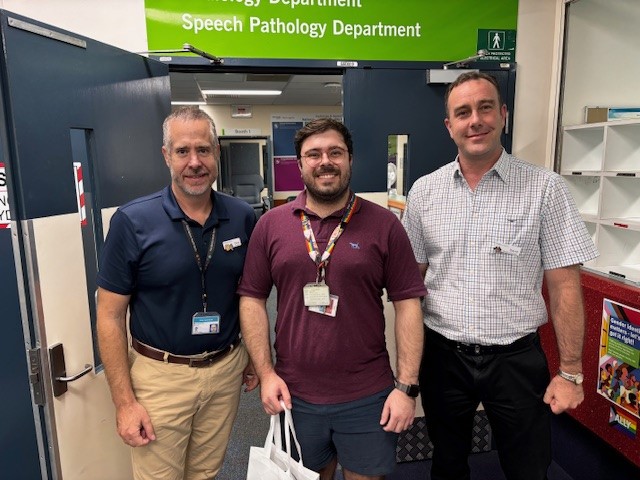
Pictured are Audiology Department’s David Patmore, Director David Da Silva (right), and Prostate cancer researcher Brandan Holt with some donations from Neurosensory.
Do you have an over the ear hearing aid you no longer use, or know someone who does? The PA Hospital’s Audiology Department can put it to use to improve the life of someone else.
The department runs a hearing aid bank for patients who have hearing loss that meets the criteria for crisis intervention who don’t qualify for hearing services but could still benefit from a hearing aid.
The hearing aid bank runs largely on the kindness of donations from the public and as well as over the ear hearing aids, also require donations of the batteries the aids run on. Specific batteries that are of the most help to the service are seeking 675, 312 and P13 batteries. Assisted Listening devices (ALD) can also be donated to help others.
PAH Audiology Department Director David Da Silva said by simply donating unused hearing aids and accessories like batteries, you can help a wide range of community members to have improved hearing.
“If we identify, anyone that meets crisis intervention, so someone that's not eligible for hearing services but has a health care card or identifies as Aboriginal and or Torres Strait Islander, incarcerated, or we can verify they're homeless or refugees, we'll fit them with devices, the best devices we have on hand. They're second hand. We're very lucky in Australia to have a really good hearing services program, but there are exclusions and some of the most vulnerable populations are excluded for different reasons,” he said.
David said though the bank has good stock they can always do with more as demand can go up depending on the amount of patients that meet the criteria, patients who are referred to them from a variety of places and departments.
“They could be seen by the ear, nose and throat team here at PA, could be seen by a GP, or in community, they'll send the patient to us if they've got a hearing loss.”
David hoped to raise awareness among the community that the hearing aid bank service is available to help but that it also requires donations, adding that different community clinics and other services can make a big difference.
The bank recently received two donations from hearing aid specialist Neurosensory which will be put to good use.
“When people upgrade their hearing aids, at a lot of the bigger clinics they often leave the hearing aids there. We just want people to know they can give us those devices. The palliative care services where people do pass, their families may not be aware that they can give their hearing aids to us. We can reuse them to help someone.”
The Hearing Aid Bank recently benefitted from several donations from Neurosensory Chermside which were brought in by Brandan Holt, Clinical Trials Coordinator, with the Australian Prostate Cancer Research Centre, based at the PA. Brandan’s partner Callum Caesar is a Neurosensory employee and helped facilitate the donation.


