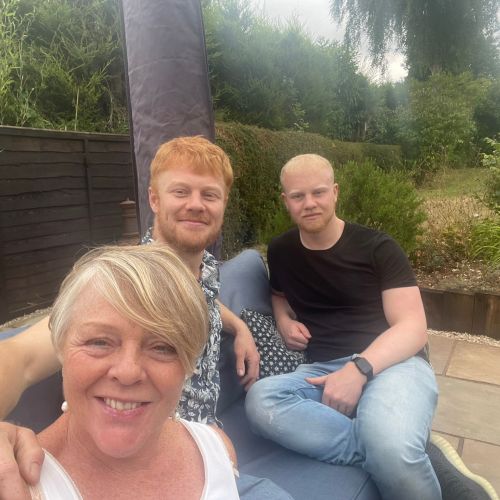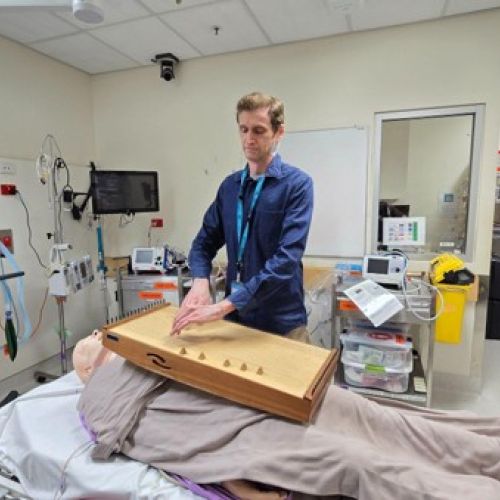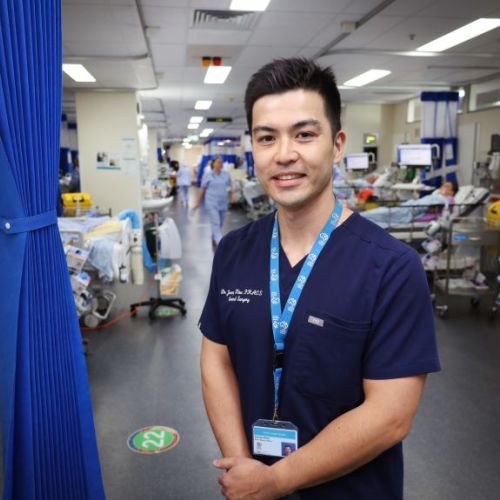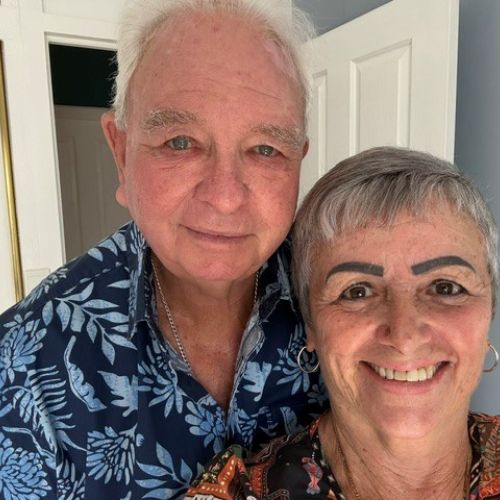
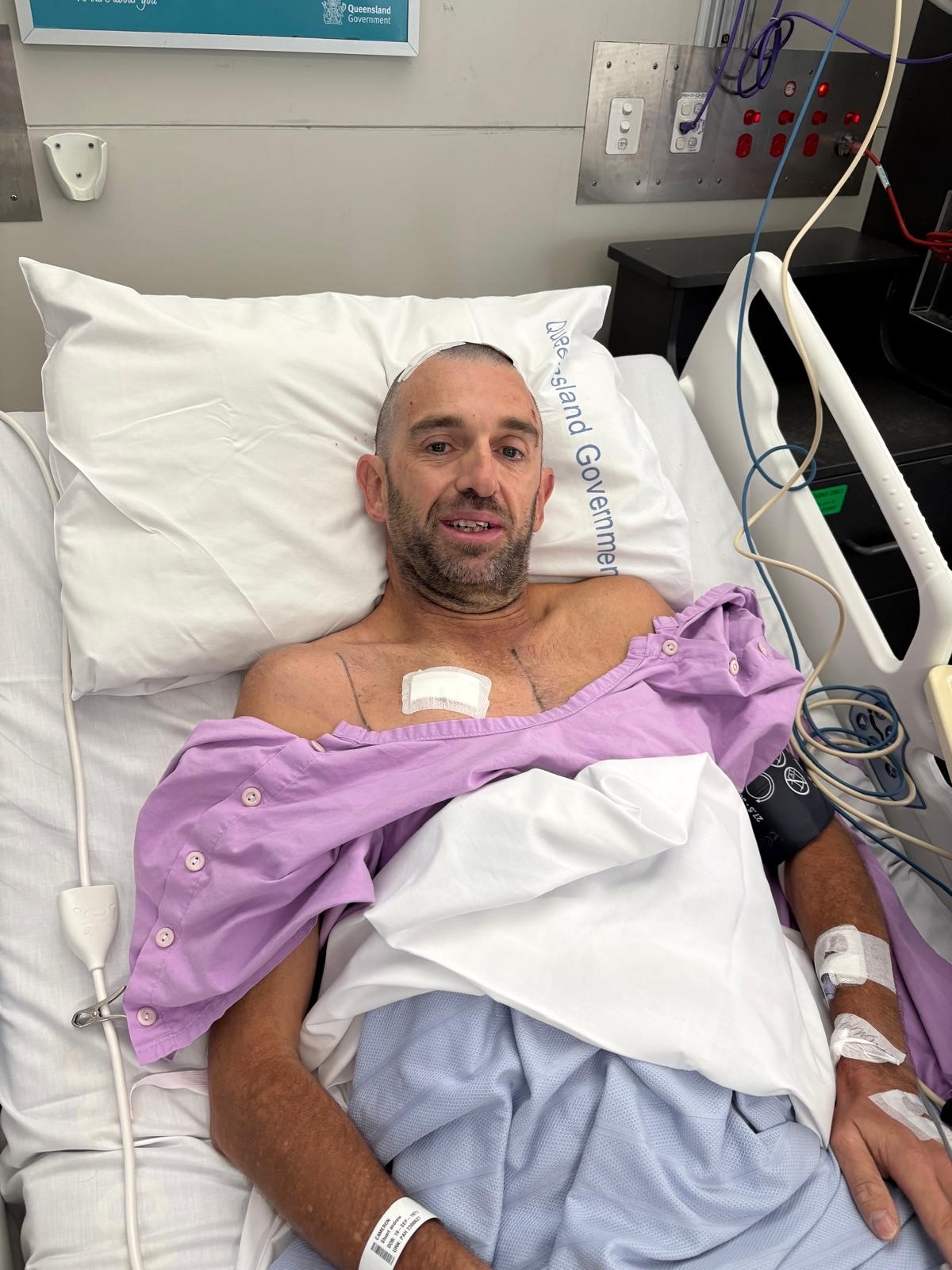
It took 16 dedicated and skilled PA Hospital staff, but Stuart Cameron is walking properly again and sleeping better, and for that he is eternally grateful.
Stuart was diagnosed with Young Onset Parkinson’s Disease in 2019, but explained signs of something major being wrong with his health were for apparent at least 18 months prior.
After his participation in clinical trials failed to slow the disease’s progression, he underwent deep brain stimulation surgery (DBS). A procedure which has made a world of difference for the married Brisbane father of two.
Stuart underwent DBS, which involves the placement of small electrodes in the brain that produce targeted electrical pulses to calm abnormal brain signals, in August 2025,
“I knew there was something wrong in 2018, but multiple trips to my GP and specialist tests for all sorts of things all failed to determine what it was” he said.
“Arriving home from another negative test result, I decided that I was going to get on the computer and not get off until I worked out what was wrong with me. I found a document after about two hours that listed 12 signs you may have Parkinson's.
“I think I had eight of the 12 symptoms. I went back to the GP and said, ‘I think I may have Parkinson's’. He said, ‘possibly, but I can't diagnose or prescribe anything, you've got to see a neurologist.”
“There are only three neurologists in Brisbane, and he called them all but unfortunately the earliest they could see me was six months!’
“These six months were horrible, as once I looked into the disease in a bit more detail I was convinced I had Parkinsons but couldn't get prescribed any medication or any specialist input until my official diagnosis in January 2019.”
With Parkinsons affecting each patient differently, his primary symptoms were tremors down his left side, loss of smell, insomnia and an inability to swing his arms when he walked.
Before committing to the surgery, Stuart was keen to contribute to the progression of Parkinson’s research.
“My Neurologist, Dr Alex Lehn, had mentioned DBS in 2023, in terms of the risks and the likely outcomes. However, at that point, I'd been involved in a number of medical trials through PA,” he said.
“I’d done some trials of new medications and assisted with studies on the impact of PD on my memory and mental health and was doing another one, a sort of intelligent shoe trial that measured your step length, monitoring your walking, trying to work out whether exercises that were prescribed for PD were actually helped alleviate walking and balance problems.
“The first question most trials ask is, ‘have you had DBS’ and if it’s a yes, you're excluded from the trial. I quite enjoyed these trials because my background is in engineering and science, so I was keen to be able to help out in some way.” As a result, I delayed having the surgery for 2 years, but early this year the disease was starting to impact me worse than ever and so I decided to go ahead with it.
Thanks to the surgery, which involved 16 neurosurgery and theatre staff, Stuart is not only walking better, but his sleep is also much improved, with the additional rest helping to improve his overall health.
“I only had the DBS surgery in August (2025), but the changes have been amazing. I spoke to the surgeon beforehand and they asked what I was hoping to achieve and I said, ‘well, if I could get back to walking normally and also get back to sleeping normally, I would be a happy person’.
“According to my Apple Watch, which measures my sleep, before the surgery, it was recording two and a quarter hours of sleep a night on average.
“I'd either not be able to get to sleep and be lying awake all night and trying to take medicine to try to help me sleep or going to sleep and waking up two hours later and then not being able to get back to sleep.
“Ever since the surgery, my average sleep has been going up about an hour a month. It's now up to six and a quarter hours sleep, which is a revelation from the sleep perspective.” On top of that my walking is almost back to normal!
Stuart can’t speak highly enough of the care provided to him by his Neurologist Dr Alex Lehn and his whole care team at the PA.
“They've been fantastic. Right from day one, Alex in particular, he's a champion,” he said.
“He’s very caring, even to the extent of holding my hand during the surgery. The surgery is quite intense because you're awake while they’re drilling into your skull.
“I dealt a lot with Annette Denny during some of the medical trials. She's been fantastic and Ariane Valerio has been as well. To be honest, everyone at PA have done an amazing job. They all genuinely care about your wellbeing, care about you as a person, you feel as though you're not just a patient number.”
Thanks to our incredible supporters,the PA Research Foundation has supported research and state of the art equipment by PA Hospital's neurosurgery clinicians and department for several years. This support has included funding for the Gamma Knife which is currently being used to research and treat Parkinson's tremor, as well as equipment for neurosurgeon Associate Professor Sarah Olson, and staff education funding for neurologist Dr Alex Lehn.
You can choose the Foundation as your place to give and support patients like Stuart to have improved health outcomes here.
https://www.pafoundation.org.au/blog/foundation-donors-help-sarah-save-lives
https://www.pafoundation.org.au/blog/gamma-knife-treatment
https://www.pafoundation.org.au/blog/dr-stefan-blum-----advancing-neuroimmunology