Friends of the Foundation
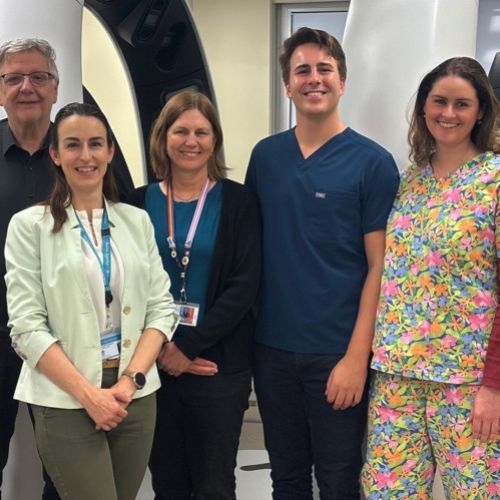
Prof. Fiona Simpson, PhD, NHMRC Leadership Fellow
Professor Fiona Simpson is a cell biologist whose research explores how cells function and communicate, and how these processes can be harnessed to improve cancer treatments. Her work focuses on understanding how anti-cancer drugs enter tumour cells and how immune cells interact with cancer, with the aim of developing more effective therapies and improving patient outcomes.
Through her research and collaborations, Fiona and her team are uncovering new insights into the biology of cancer and the immune system, helping translate laboratory discoveries into advances in patient care.
What is your area of research?
Originally, I was a cell biologist working on a process called endocytosis, which is the way things get inside cells. Over time, we started applying that knowledge to cancer and the way anti-cancer drugs get into tumour cells, with the aim of improving how these treatments work.
Some of our work also looks at how immune cells function in autoimmune disease and in clearing tumours. Understanding these cellular processes gives us opportunities to improve therapies and develop new approaches to treating cancer.
What originally drew you to this area of research?
My work on endocytosis began during my PhD in clinical biochemistry. I later started applying that basic knowledge to cancer research after my Mum died of cancer.
That experience made the work much more personal and reinforced the importance of understanding cancer at a fundamental biological level so that we can ultimately improve treatments for patients.
What impact do you hope your research will have on patient care or public health in the near and long term?
Some anti-cancer drugs work best if they stay outside the tumour cell for a while before going in, while others work better when they enter the cell quickly.
If we can better understand these processes, it could lead to treatments that work more effectively for patients, with less drug resistance, fewer recurrences and fewer side effects.
Our work on immune cells is still very fundamental at the moment. We’re trying to understand how these cells function so that in the future we might be able to control or guide these responses to improve treatment outcomes.
How has funding from the PA Research Foundation helped accelerate your research?
When I first started testing some of my ideas, I couldn’t get any funding at all. The PA Research Foundation helped us keep doing science and supported our first clinical trial.
Quite honestly, we wouldn’t exist if not for Foundation support. After publishing a paper in Cell and completing early trials, we were able to attract industry collaboration and later secure NHMRC funding.
Today the grant success rate is around seven percent, and researchers must find funding for salaries, staff and experiments through grants and fellowships. Without organisations like the PA Research Foundation, we simply wouldn’t be able to do the work that we do.
What challenges do you frequently face in your research?
The science itself is challenging, but that’s what we’re trained to do. The bigger challenge is the funding environment and the insecurity of research careers. I’ve been at The University of Queensland for 26 years and I’m currently on my nineteenth or twentieth contract.
Keeping research programs running, training students and maintaining laboratories in this funding environment is incredibly demanding. Despite that, it always feels like a job worth doing because of the chance that our work might help make things better for patients.
Can you share a recent breakthrough or exciting development in your research?
We’ve recently discovered some interesting insights into how immune cells activate and how cancer cells can mimic parts of this pathway.
By copying aspects of immune cell signalling, cancer cells may be able to disguise themselves and avoid being destroyed by the immune cells that normally patrol the body looking for threats. Understanding this mechanism could help us design new ways to target tumours.
What’s the most rewarding part of your work, and what are you most proud of in your journey so far?
There are two things that stand out.
The first is translating a scientific discovery into a clinical trial. That’s both the scariest and most rewarding part of the journey, because it’s where the research has the potential to directly benefit patients.
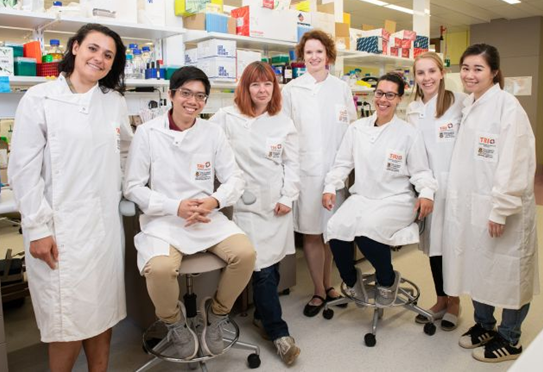
The second is the students and postdoctoral researchers we have trained over the years. They are incredibly bright and hardworking people who have chosen science because they want to improve things for humanity, often instead of pursuing more stable or higher-paying careers. It’s a privilege to work with them every day.
What’s a misconception people often have about your research?
That’s a fun question. One misconception I sometimes hear is that researchers are all funded by big pharmaceutical companies. If anyone knows how that works, please let me know!
On a more serious note, the reality is that funding for research is highly competitive and job stability can be quite limited. When people lose trust in science or research institutions, it can discourage younger scientists from staying in the field, which is concerning for the future.
Looking ahead, what future directions or innovations excite you the most in your area of research?
Some of the new treatments being developed for cancer are truly remarkable. I think we may be looking at a future where many cancers can be treated much more effectively, similar to how diabetes went from being considered a devastating disease to one that can be managed with insulin.
Even cancers that were previously very difficult to treat, such as multiple myeloma, are now seeing new clinical trials with remarkable results. It’s an incredibly exciting time in cancer research.
How important are organisations like the PA Research Foundation in terms of funding research and keeping it progressing?
Organisations like the PA Research Foundation are not just important, they are essential.
We simply wouldn’t have been able to achieve what we have without their support. I’m grateful to the Foundation team, their supporters and corporate partners every day.
The PA Research Foundation can’t do its work without its donors and supporters – what would you say to them?
We cannot thank the supporters enough.
We work to try to give people who have no options left a real sense of hope, and that hope is made possible by the generosity of donors and supporters. In many ways, they are just as much a part of our team and our work as anyone in the lab.