
Friends of the Foundation
Professor H. Peter Soyer MD FACD FAHMS
Chair in Dermatology
Professor H. Peter Soyer is a leading researcher focused on improving the early detection of melanoma through advances in skin imaging technology. His work brings together clinical expertise, research innovation and new diagnostic tools to help detect melanoma earlier, when treatment is most effective and outcomes are significantly improved.
Through his research and leadership in large collaborative programs, Peter is helping to transform how melanoma is identified and monitored, particularly in high-risk countries like Australia.
What is your area of research?
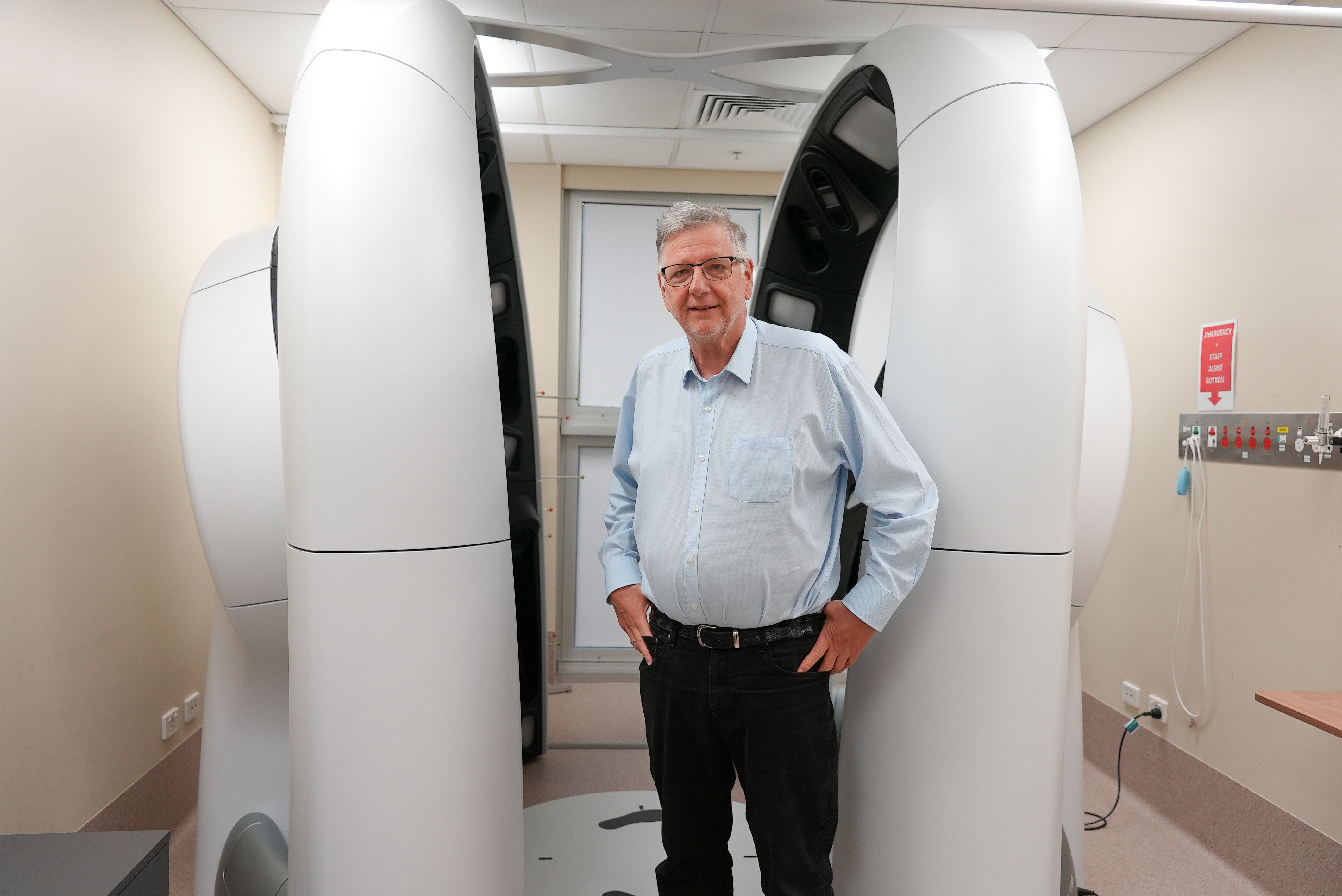
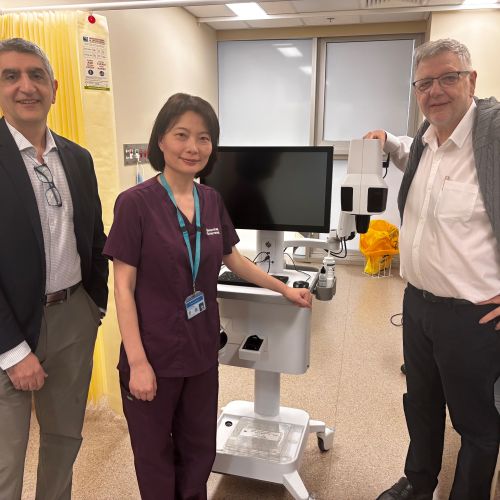
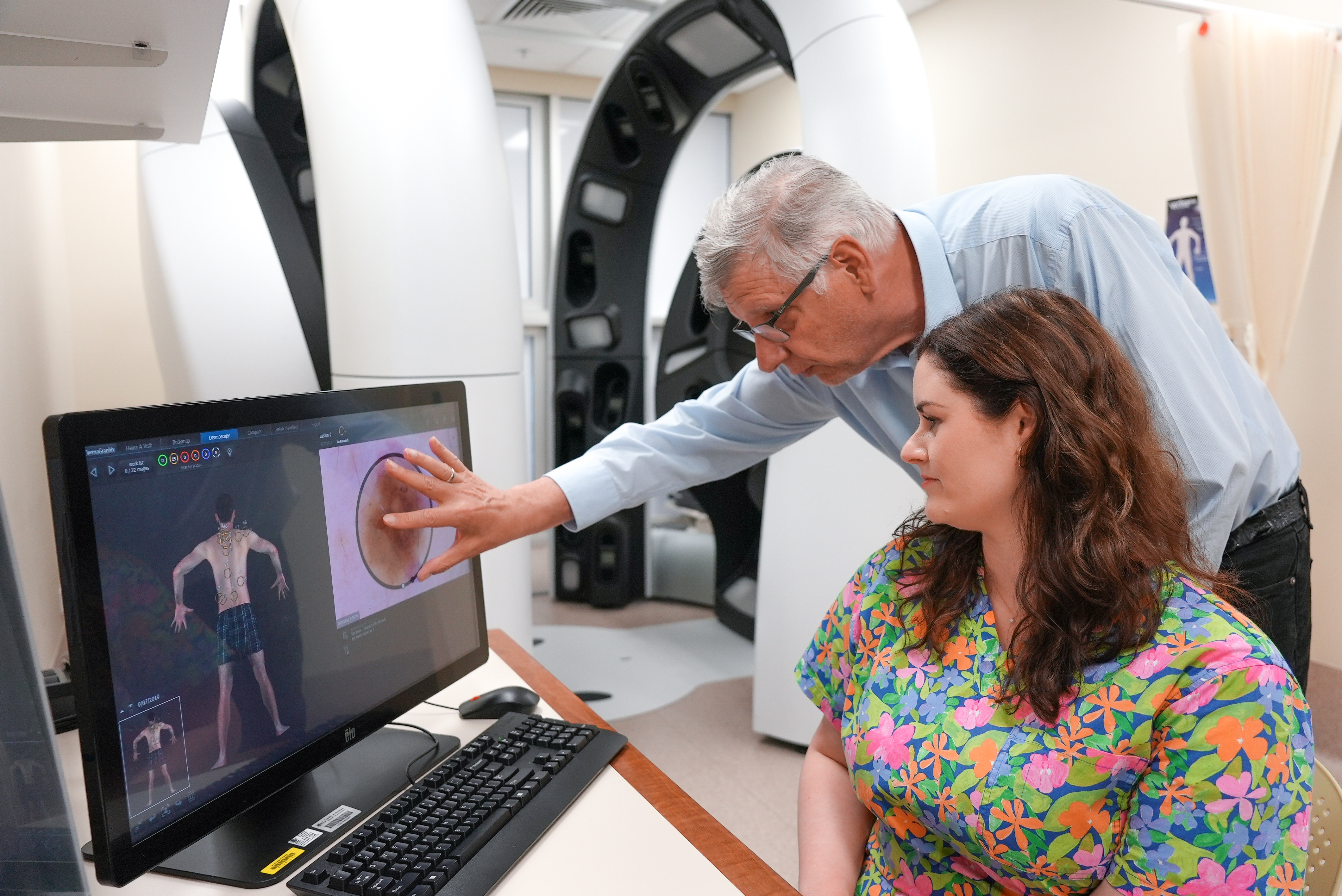
My research focuses on the early detection of melanoma, particularly through advances in skin imaging technologies. This includes dermoscopy and more recently 3D total body photography, which allow us to detect suspicious changes in the skin much earlier and with greater accuracy.
The goal is simple: find melanoma earlier, when it is easiest to treat and outcomes are best.
What originally drew you to this area of research?
My interest in melanoma detection started during my registrar training at the University of Graz in Austria in 1984, when I was assigned to work on surface microscopy as a tool for detecting melanoma earlier.
At the time this approach was still very new. I gave my first presentation on dermoscopic–pathologic correlation of moles and melanoma in Vienna in 1985, and that experience really set the direction for my career.
Since then, my work has focused on trialling new technologies that help doctors identify melanoma earlier and more accurately. This is especially important in places like Australia, and Brisbane in particular, where melanoma rates are among the highest in the world, so earlier detection can make a real difference to patient outcomes.
What impact do you hope your research will have on patient care or public health in the near and long term?
The biggest impact is detecting melanoma earlier, when it is much easier to treat and survival rates are very high.
In the near term, better imaging technologies can help doctors identify suspicious changes earlier and reduce unnecessary procedures. Over the longer term, the goal is to make early detection more accurate, scalable and accessible, particularly in high-risk countries like Australia, so fewer people are diagnosed with advanced melanoma.
How has funding from the PA Research Foundation helped accelerate your research?
The PA Research Foundation has been an incredibly important partner in supporting dermatology research in Brisbane. Since I started at The University of Queensland in 2007, their support has helped us run community skin cancer screening initiatives and provided vital seed funding to start new research projects.
That kind of early or gap funding is crucial because it allows researchers to test new ideas, which can then lead to larger national and international research grants. In that sense, the Foundation has played a key role in helping our research grow and ultimately benefit patients.
What challenges do you frequently face in your research, and how do you overcome them?
One of the biggest challenges in translational research is bridging the gap between universities and the healthcare system. Research often happens in academic settings, while patient care happens in hospitals, and bringing those two worlds together can be complex.
Because I work both with The University of Queensland and Metro South Health, I’m in a good position to help connect research with clinical practice. Organisations like the PA Research Foundation also play an important role by supporting collaboration and helping move promising ideas from the research stage into real benefits for patients.
Can you share a recent breakthrough or exciting development in your research?
One exciting recent milestone for our team was receiving the 2025 Shaping Australia Award in the Problem Solver category from Universities Australia.
The award recognised the work of the Australian Centre of Excellence for Melanoma Imaging and Diagnosis (ACEMID), a collaboration between The University of Queensland, Monash University and The University of Sydney.
Our program is developing new imaging technologies and research approaches that are transforming how we detect melanoma earlier. The goal is to set a new global benchmark for early detection and ultimately improve outcomes for patients.
What’s the most rewarding part of your work, and what are you most proud of in your journey so far?
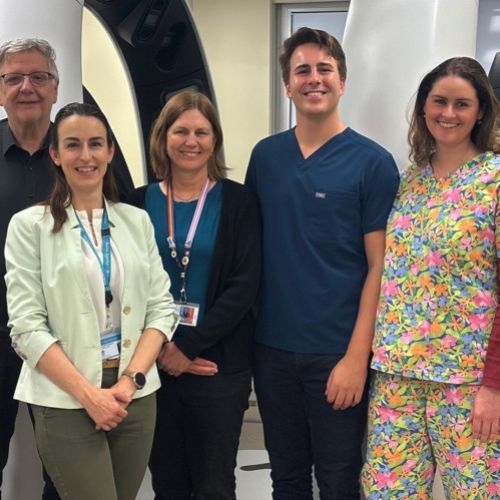
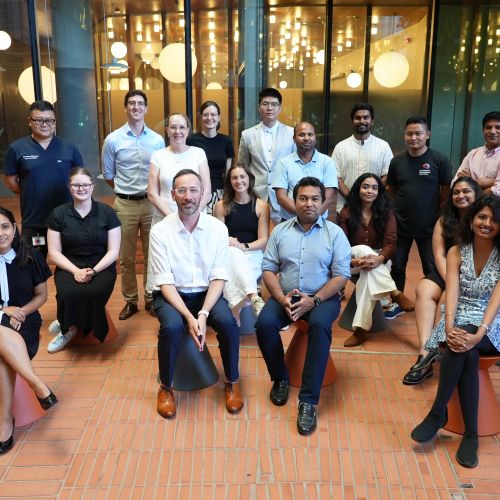
The most rewarding part has been building an outstanding research team over many years. Science is always a team effort, and I’m very proud of the people we have trained and worked with along the way.
As my own research journey gradually slows down, it’s incredibly satisfying to see the next generation of researchers continuing this work and pushing the field forward.
What’s a misconception people often have about your research?
One common misconception is that new technologies like advanced imaging and artificial intelligence will replace doctors.
In reality, these tools are designed to support clinicians, helping them detect melanoma earlier and make more accurate decisions. The goal is always to combine technology with clinical expertise to improve patient care.
Looking ahead, what future directions or innovations excite you the most in your area of research?
I’m particularly excited about advances in total body imaging technologies, combined with artificial intelligence, which have the potential to transform how we detect melanoma.
These tools could support a new type of healthcare professional, called a melanographer or skin imaging technician, who can help monitor patients and identify suspicious changes much earlier.
Together, these innovations could create a real shift in how melanoma screening and surveillance are done, making early detection more accurate and accessible. At the same time, prevention will always remain essential. Public health messages like “Slip, Slop, Slap, Seek, Slide” are still critical in reducing skin cancer risk.
How important are organisations like the PA Research Foundation in terms of funding research and keeping it progressing?
Organisations like the PA Research Foundation are incredibly important because they provide vital support that helps research move forward.
In an environment where national research funding is becoming increasingly competitive, foundation support can make a real difference. This type of funding often provides the early or bridging support needed to start new projects, generate initial results and ultimately secure larger grants.
In that way, organisations like the PA Research Foundation play a crucial role in helping innovative research progress and translate into benefits for patients.
The PA Research Foundation can’t do its work without its donors and supporters – what would you say to them?
Research foundations like the PA Research Foundation simply couldn’t exist without the generosity of their donors and supporters. Their contributions make it possible to fund innovative research and ultimately improve patient care.
I would like to say a sincere thank you to everyone who supports the Foundation. Your support truly helps make this work possible.