
Imagine you’re 25, have a great job and your whole life ahead of you, then what you’re told is likely COVID-19 turns out to be a life-altering lesion on your brain.
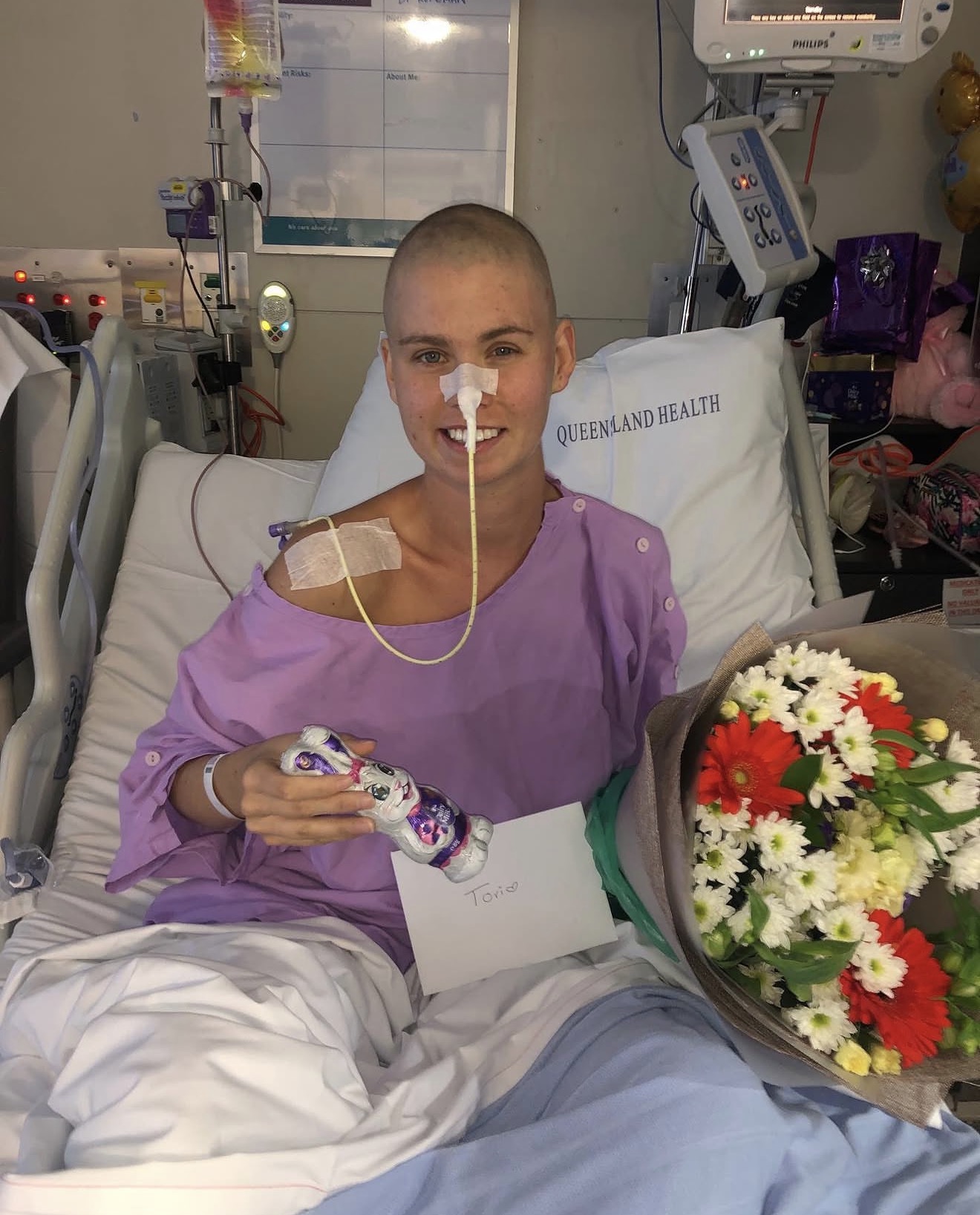
This is Tori Dent’s story, and despite a 14-month hospital stay which included brain surgery and time in the intensive care unit (ICU), as well as a lengthy and ongoing recovery, she refuses to let a change in circumstances change her outlook on life.
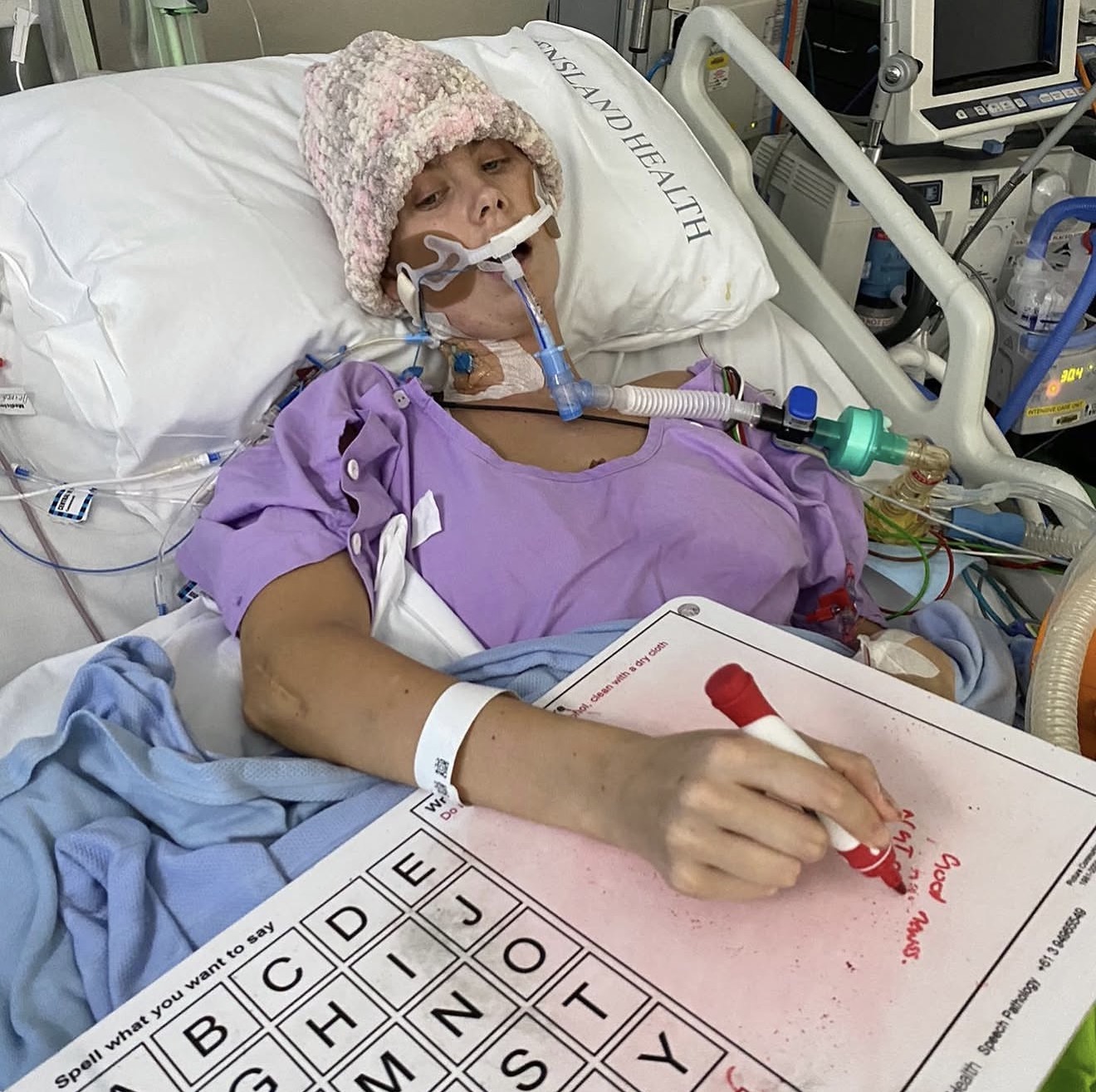
Tori’s journey began in 2020, when she presented unwell to Logan Hospital, where she also worked as a theatre nurse, with what others believed may have been a case of COVID. It turned out what was making her feel dizzy, affecting her senses and impacting her ability to speak and swallow wasn’t COVID, but a benign lesion on her medulla oblongata or brainstem.
This is the area of the brain which connects to the spinal cord and controls several functions of the body’s nervous system.
After being transferred to the PA, Tori underwent surgery where surgeons removed as much of the lesion as possible. Shockingly, though her surgery was a success, she would later learn that while in the ICU her lesion had started growing faster than ever before.
“I spent the weekend in a COVID ward because you have to do precautions until they know you don't have it. It was my mum and I that really wanted me to get to PA because I seemed to be getting worse and Logan don't have a neuro department,” she said.
“They found the lesion at Logan and the conversation between Logan and PA doctors was that it wasn't operable, just because of where it was. Their plan was to treat my symptoms in hospital at Logan for six weeks with steroids and things. But my condition was changing for the worse and eventually I transferred to PA. They did another scan the day I arrived. That’s when they found out how fast it was growing.
“They thought it was a benign, slow-growing kind of childhood tumour, a haemangioblastoma. I was 25 so it was just borderline on the age that is young enough for that to be what it was.
“The approach was that it’s slow growing, there's nothing that they can do about it because it's not going to progress very fast, so they would just manage my symptoms, try and get my dizziness under control and all the rest of it. Then I got worse really fast.
“I ended up having surgery a couple of days after I arrived at PA, after that scan. Technically, it was emergency brain surgery, and their plan was to remove as much as they could without touching or disturbing the brainstem.
“Then depending on what it was, they would then treat what was left. But it grew one third in one week, which is very fast. What they didn't expect is that it grew after my surgery, but they didn't know that for about two to three weeks.
“They told me they got 80% of it. And then when I was scanned, in ICU throughout my time there, it had grown to over four centimetres.
“I had lots of tests that they obviously sent for pathology, and they didn't get an answer from. I had a lumbar puncture and that didn't show any markers for infection or anything like that. I had recently travelled, so that was important, but they ruled that out as well.
“At the time I was discharged, it was called an undifferentiated brainstem lesion. But I saw neurology at PA for the last time in November last year (2025) and now they call it an inflammatory lesion.”
Tori’s recovery included stays post-ICU on the PA Hospital’s brain injury rehab unit and Metro South Health’s brain rehabilitation unit at Wynnum. Even before the support she was given in those locations by the PA’s physiotherapy and occupational therapy teams, she was full of gratitude for the care she was given at every stage.
“I can't fault the physios. I know that they saved my life in ICU because I needed a lot of chest physio, and then even in the ward the physios were always chirpy, caring and patient.
“The nurses were great and treated me like any other patient, just how I’d expect to be treated.”
During her recovery in the ICU, Tori was able to keep her body active thanks to an In-Bed Cycle that was made possible by the Foundation, a piece of equipment Tori said was highly beneficial to her long-term rehabilitation.
“That's something that I used in ICU where I was unable to even sit up. I know that that meant a lot to me. To be able to move my body when my body really didn't want to. I think that was great for me,” she said.
“I love the fact that I still remember the physios that introduced me to it. You remember the people that really like impacted your state of mind, there are some nurses and definitely some physios and even some OTs and speech therapists that I don't think I would forget their names because they're the people that introduced it to me and told me that I was someone that could use equipment like that.
“It's just something that I didn't even know about. I was a nurse and I had absolutely no idea that things like that were available to help patients recover.”
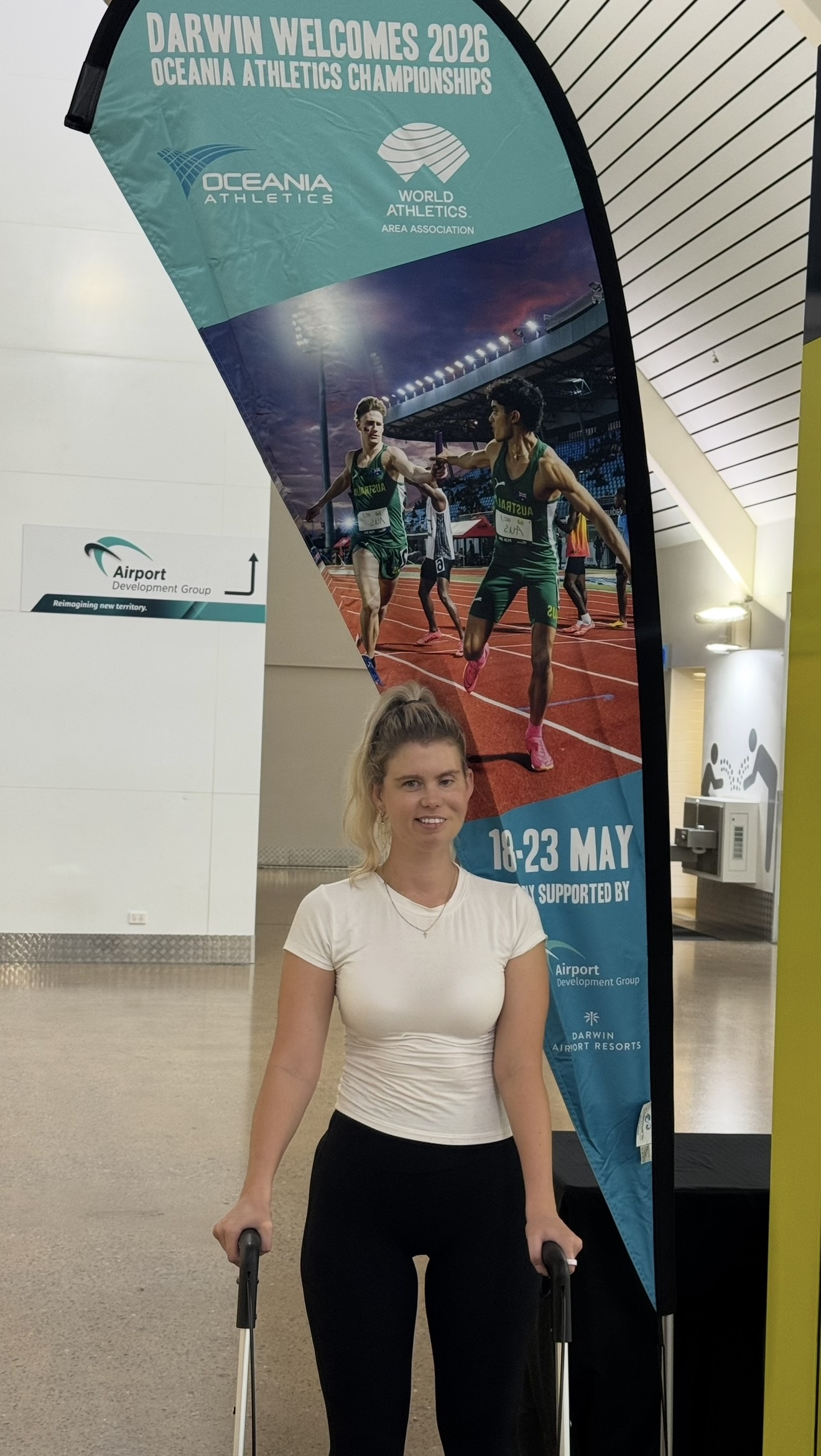
Tori has taken the changes in her life in her stride and set herself new goals. She is studying for a master’s in rehabilitation counselling at Griffith University. She’s also refused to let her diagnosis dampen her enthusiasm for physical activity, setting her sights on competing in the 2032 Paralympic Games.
“I used to be very sporty, and I have spent the last few years trying to see what I'm capable of now. I know and believe that I'm very capable of my limitations. I'm now in the para unit at the Queensland Academy of Sport, which is the pathway for the Paralympics, so that’s the big goal for me.”
You can donate to support the recovery of patients like Tori here.