Can a patient’s own immune cells be retrained to find and destroy their cancer? That’s the question at the heart of CAR-T cell therapy, and thanks to incredible supporters like you, more Queenslanders are getting the chance to access it through clinical trials at the PA Hospital.
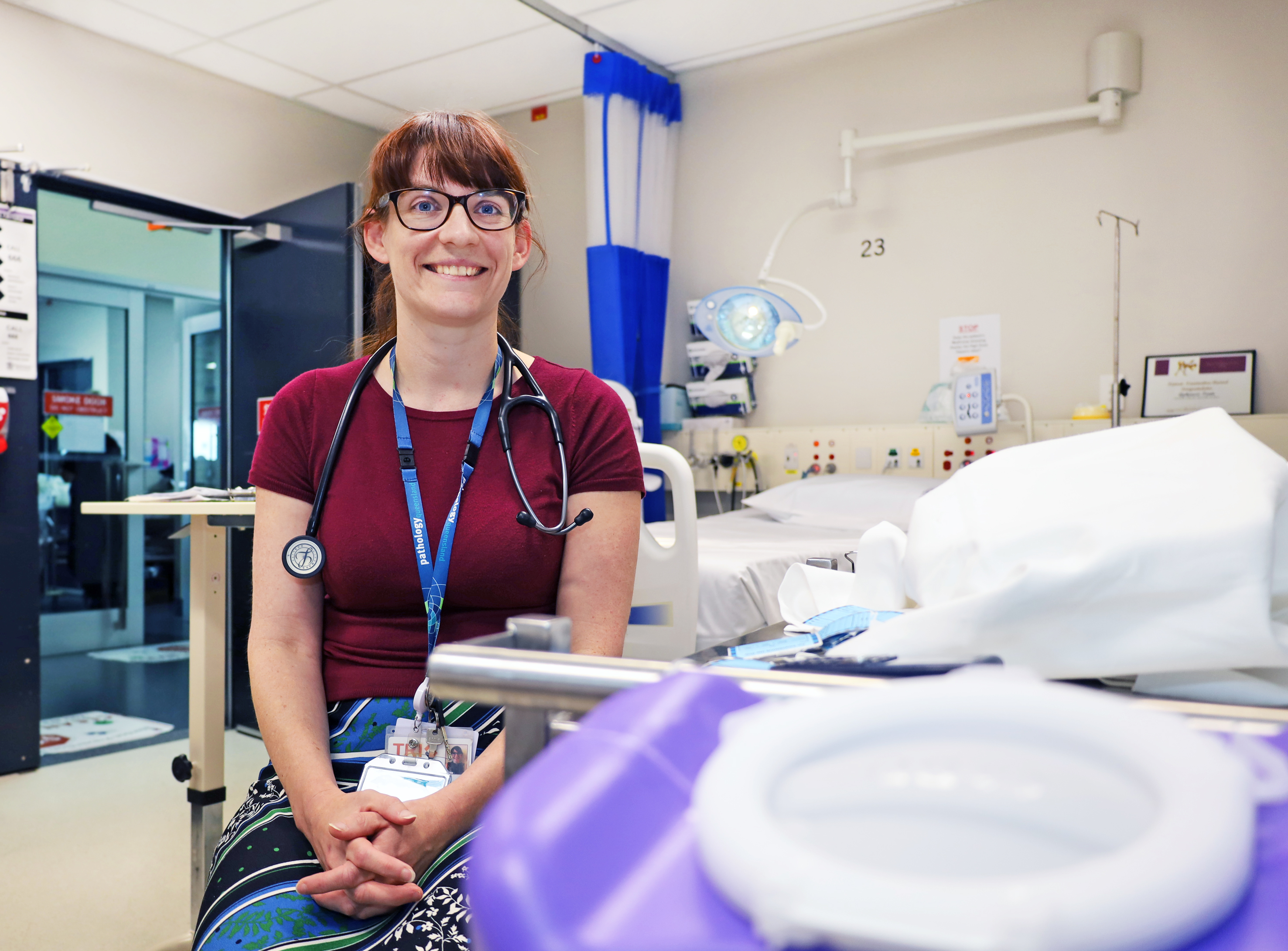
Haematologist Dr Fiona Swain runs the PA Hospital’s CAR-T cell program. In this therapy, a patient’s T cells, the immune cells that normally fight infection, are collected and genetically modified in a specialist laboratory to target their cancer. They are then infused back into the patient.
“We know that chemotherapy does work, but it comes with a lot of toxicity. It’s not targeted towards the cancer, and so it damages healthy tissue and causes a lot of side effects. But we know that the immune system itself can fight cancer,” Dr Swain said.
“CAR-T therapy is really part of a paradigm shift in cancer therapy that’s aimed at harnessing a patient’s immune system to actually fight the malignancy.”
The PA’s standard of care CAR-T program went live in May 2025 and has since infused 29 patients. Clinical trials, though, give patients access to new treatments years before they become standard care. Two years ago, the team approached the Foundation because one thing was holding them back.
“For us at the time, the rate limiting factor for being able to do these trials was the need for a scientist,” Dr Swain said.
Foundation donors funded a clinical trial CAR-T scientist in the PA’s cellular therapy lab. The scientist manages trial accreditation, licensing for genetically modified products and audit dry runs, as well as the receipt, storage and thawing of every patient’s cells.
“With the support of the PA Research Foundation, we were able to engage in a number of lymphoma and myeloma clinical trials. Before that position was created, in the 2023 to 2024 financial year, we had only been able to do one trial that enrolled one patient. It’s really exponentially increased over the subsequent years,” Dr Swain said.
In the past four years, 31 patients have been enrolled onto cellular therapy trials at the PA, including a patient named Gary. He lives with multiple myeloma, a cancer that is treatable but considered incurable, and he was the first patient enrolled on a trial made possible by the Foundation-funded role.
“He spent a week in hospital and he hasn’t been an inpatient in the hospital since that time. He has still had regular monthly visits and blood tests, but he’s on no active cancer treatment and that’s just been life-changing for him,” Dr Swain said.
“This is why our patients are often really excited by these trials, because it’s a one and done treatment.”
The team is now planning a myeloma trial of a CAR-T therapy with two targets, which could spare half its participants a stem cell transplant. They are also planning a trial in amyloidosis, and talking with the PA’s kidney and rheumatology teams about helping transplant patients and people living with lupus and rheumatoid arthritis.
“Cellular therapy is really going beyond haematological malignancies and it really is the forefront of cancer treatments, and even non-cancer treatments, going forward,” Dr Swain said.
You can support cancer research and clinical trials at the PA Hospital by making the Foundation your place to give here.