Some discoveries don't get made by government grants. They get made because someone, somewhere, decided to believe in them first.
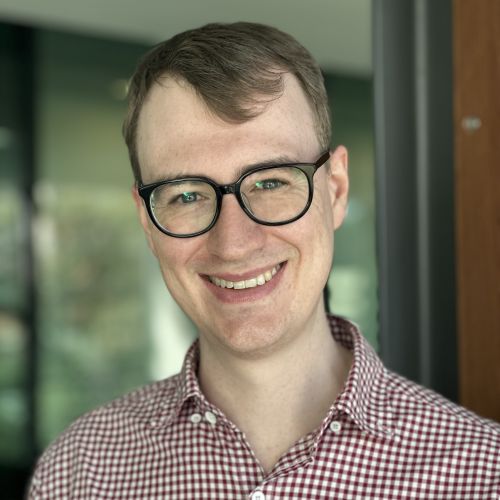
That's the message from Associate Professor Arutha Kulasinghe after the PA Research Foundation confirmed a $224,000 investment into his world-leading spatial biology research at the PA Hospital campus.
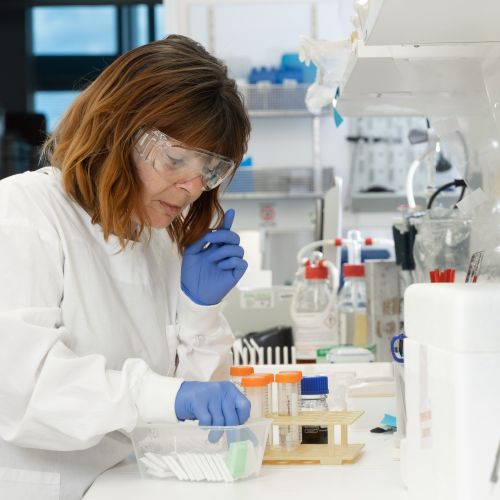
The funding - made possible entirely by the Foundation's generous donors - will support a dedicated data scientist inside A/Prof Kulasinghe's lab at the Translational Research Institute. Their job will be to turn the staggering amounts of data his team produces into something simpler and far more powerful: an answer to which cancer patients will benefit from which treatments.
It is a question that, until very recently, has been almost impossible to answer in advance. Immunotherapies cost up to $500,000 per patient per year and work in only a fraction of cases. The cost to the patient is even higher. They endure toxic side effects from a drug that, for them, was never going to work.
A/Prof Kulasinghe's spatial biology research, often described as a 'google maps' approach to cancer, is changing that.
"Spatial biology platforms now generate extraordinarily rich datasets, mapping the activity of every gene in every cell across entire tissue sections, but the bottleneck is increasingly analytical rather than technological," he said.
"Having a skilled data scientist embedded in our team means we can move faster, go deeper, and extract the clinical insights from our data that will ultimately give clues in the tumour microenvironment of individual patient samples."
The work spans lung, head and neck, and skin cancer, and the team is already identifying the spatial 'signatures' that predict treatment response.
"We are closer than we have ever been, and the pace of progress is accelerating," A/Prof Kulasinghe said.
"The biggest avoidable harm in cancer care right now is patients receiving treatments that will not work for them, enduring the toxicity and losing the time they could have spent on something that would. If we can predict from a tissue sample, before treatment begins, whether a patient will respond to immunotherapy, we eliminate that harm. The translation is not decades away. With continued investment, we are talking about years."
What makes this investment unusual is its reach. Tools developed in Brisbane don't stay in Brisbane. Arutha's lab openly publishes its methods and shares software internationally, meaning each dollar donated locally has impact far beyond Queensland.
"Computational approaches developed here in Queensland, supported by the PA Research Foundation, are already being used by researchers in the United States, Europe, and Asia," he said.
"Every advance we make accelerates the entire field, not just our own program. In that sense, this investment has a multiplying effect that extends well beyond our walls."
It also does something else. It keeps young scientists in science.
"For our team, many of whom are early in their careers and acutely aware of how precarious research funding can be, this kind of support is stabilising and energising in equal measure," A/Prof Kulasinghe said.
"It says that there are people in the community who value what they do and want to see them succeed. That is not a small thing when you are a postdoctoral researcher or a PhD student wondering whether science has a place for you long term."
A/Prof Kulasinghe has been clear throughout his career that PA Research Foundation funding played the decisive role at the start. The Foundation backed his very first spatial biology project - a small grant for an unproven idea - that has since grown into an internationally cited body of work and a Nature Genetics publication.
That early belief is, he says, exactly what philanthropy uniquely does.
"It funds the ideas that are too early, too bold, or too specific to fit neatly into a funding category. It gives researchers the freedom to follow the science, without having to justify every step to a committee. And in a field moving as fast as spatial biology, that freedom is precious.
"But more than the funding, what a gift like this represents is trust. Someone has learned about this work, connected it to something they care about, and decided to act. That is deeply humbling."
His message to anyone considering a gift - of any size - is heartfelt.
"Thank you, from the bottom of my heart, on behalf of every patient whose story sits behind this research," he said.
"If there is a patient somewhere down the track who gets the right treatment because of a biomarker signature we discovered, and if that patient lives longer or better because of it, that outcome belongs as much to the people who made this research possible as it does to the scientists who carried it out."
Be part of the next breakthrough. Donate to the PA Research Foundation today.