
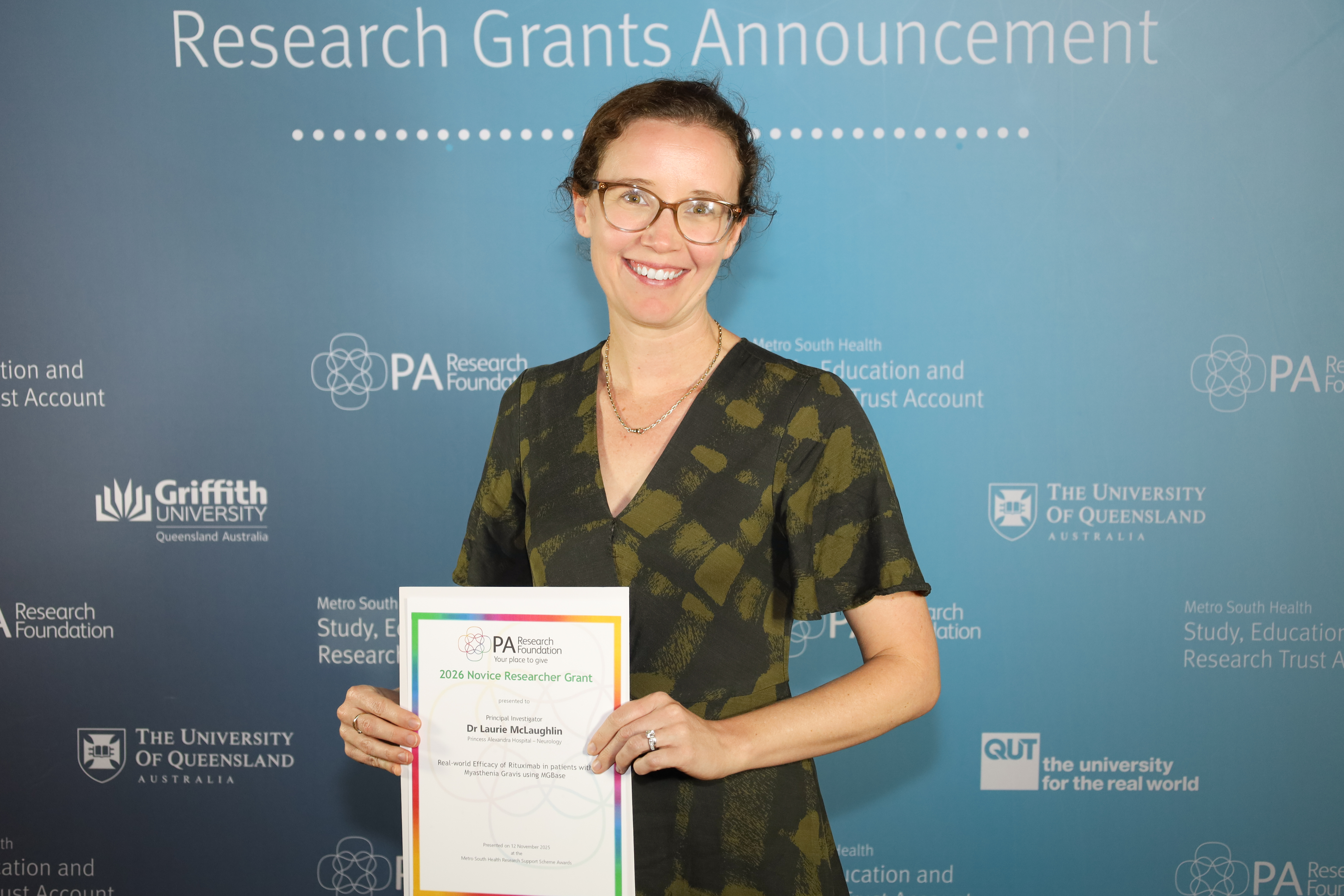
With support from the generous donors of the PA Foundation, Dr Laurie McLaughlin is on a mission to improve the lives of patients battling the debilitating autoimmune condition, Myasthenia Gravis.
PA Hospital Neurologist Dr McLaughlin will use funding made possible by Foundation supporters, to explore the effectiveness of the drug, Rituximab for the treatment of myasthenia gravis (MG). The aim of the project, along with other studies she is undertaking, is to improve the quality of life of patients living with MG, a disease with lifelong symptoms and no known cure.
Though the condition can be managed with medications, it remains a constant strain in the lives of patients and their families, as well as on the health system. “They can choke on their food, they have difficulties standing, walking upstairs, lifting anything above their head, brushing their hair, washing their hair, hanging out clothes etc. Their eyes can droop and they can get double vision so they can't drive. It can affect any skeletal muscle.”
MG causes severe weakness that fluctuates. Patients can have severe flares called myasthenic crisis, it can affect patients ability to breathe and swallow. This can result in prolonged stays in intensive care and can be fatal in a small percentage of patients. “Before development of effective treatments were developed, mortality rates were up to 70% within 12 months of diagnosis. Current mortality rates from a myasthenic crisis are about 4% but often require prolonged admissions to hospital or in intensive care.”
Part of Dr McLaughlin’s motivation for this particular research, is the fact that the medical and research community are currently divided on the effectiveness of Rituximab as part of the treatment regimen for MG.
“Studying therapies in MG is challenging. Myasthenia Gravis is a rare condition, and patients are often on many treatments at the same time, with fluctuating doses. It has been difficult to accumulate quality evidence to support each of the treatments routinely used to treat MG,” Dr McLaughlin said.
“Previous clinical studies reviewing treatments such as Rituximab have not come to the same conclusions. This has resulted in marked variability in clinical guidelines across the world. This variability is often due to challenges developing appropriate study designs to accommodate for the nuances of myasthenia gravis to consistently find a true outcome.
“My proposed study is using international, real-world data from a large database, which will provide evidence based on large populations with Myasthenia. This will provide the opportunity to identify a true effect with Rituximab if it is present. This will provide clear insight into the effectiveness of rituximab for patients with myasthenia gravis If it is effective, it will also be possible to identify when in the disease course is most effective and at what dose.” If research can lead to less burdensome treatment regimens for patients, the hope is that they can not only take less medication but be free of many of the symptoms the chronic condition imposes on their lives.
Dr McLaughlin is thankful to every single person who chooses the Foundation as their place to give, for enabling research focused on improving quality of life for patients with autoimmune conditions.
“I'm very grateful for the opportunity to be able to advance research in this condition. It's going to have a significant impact in regards to the treatment for patients here in Metro South with MG, but also around Australia and internationally.
“This is a lifelong condition, and we hope we can improve these patients long term quality of life.
“This grant will also have a huge contribution to my PhD and other research endeavours, which will then hopefully open up further research opportunities in the future as well.”