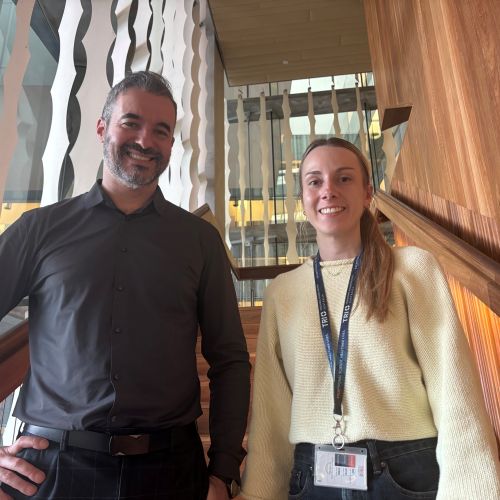

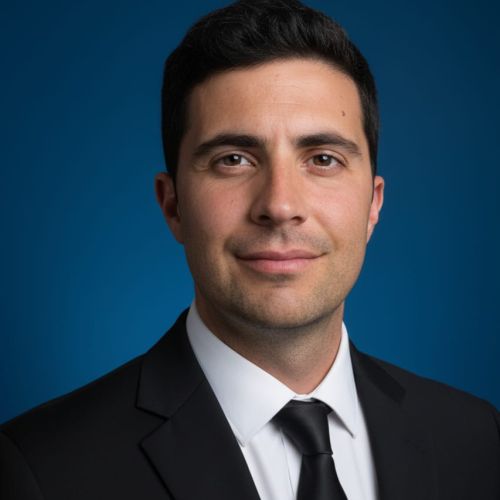
Dr Federico Sachetti is grateful for the experience and knowledge he has gained through his Orthopaedic Oncology Fellowship at the PA Hospital.
When Dr Federico Sacchetti undertook his fellowship in orthopaedic oncology in PA Hospital, the insights and experience gained was instrumental to his professional advancement in the field.
Dr Sacchetti attributes his strong interest in this specialty to Dr Rodolfo Capanna, one of his main mentors that he trained under back home in Italy.
“Orthopaedic oncology is a true frontier of our specialty, where every case is different and often requires creative solutions. Meeting Professor Capanna and learning about his work was a major source of inspiration and really sparked my interest in pursuing this field,” Dr Sacchetti said.
Coming to PA Hospital to further his orthopaedic oncology experiences, Dr Sacchetti’s fellowship role involves the assessment and management of patients with primary bone and soft tissue tumours and metastatic bone disease.
The main focus of this fellowship was developing expertise in complex tumour resections and limb reconstruction.
Dr Sacchetti acknowledges Dr Martin Lowe, who was his fellowship supervisor, as well as Dr Peter Steadman, Dr Philip Rowell and Dr Scott Sommeville for their mentorship.
“I worked with Dr Lowe and Dr Steadman in the management of the full spectrum of orthopaedic oncology, particularly primary bone and soft-tissue tumours, as well as metastatic bone disease,” Dr Sacchetti said.
These processes heavily involved Dr Sacchetti in multidisciplinary decision-making, outpatient clinics, surgical procedures and ongoing management of patients.
As part of his fellowship, Dr Sacchetti was also involved in a research project in the surgical management of destructive bony acetabular metastasis, which had him working alongside Dr Rowell and Dr Sommeville.
The project investigated the long-term outcomes of dual-mobility bearings reducing instability when compared with conventional bearing, with particular attention to implant survivorship, the complications and functional outcomes.
Research projects like this are crucial in determining the best treatment for patient survival and long-term effects on post-operation mobility and recovery.
Dr Sacchetti said the fellowship significantly expanded his surgical experience and research skills. By working in a high-volume referral centre, he was exposed to complex cases that are rarely seen elsewhere, providing him with invaluable experience in the orthopaedic oncology
field.
“I hope to combine clinical practice, research, and education, while contributing to the development of orthopaedic oncology.”
You can support the progress of orthopaedic oncology research by making PA Hospital your place to give here.
Dr Sacchetti attributes his strong interest in this specialty to Dr Rodolfo Capanna, one of his main mentors that he trained under back home in Italy.
“Orthopaedic oncology is a true frontier of our specialty, where every case is different and often requires creative solutions. Meeting Professor Capanna and learning about his work was a major source of inspiration and really sparked my interest in pursuing this field,” Dr Sacchetti said.
Coming to PA Hospital to further his orthopaedic oncology experiences, Dr Sacchetti’s fellowship role involves the assessment and management of patients with primary bone and soft tissue tumours and metastatic bone disease.
The main focus of this fellowship was developing expertise in complex tumour resections and limb reconstruction.
Dr Sacchetti acknowledges Dr Martin Lowe, who was his fellowship supervisor, as well as Dr Peter Steadman, Dr Philip Rowell and Dr Scott Sommeville for their mentorship.
“I worked with Dr Lowe and Dr Steadman in the management of the full spectrum of orthopaedic oncology, particularly primary bone and soft-tissue tumours, as well as metastatic bone disease,” Dr Sacchetti said.
These processes heavily involved Dr Sacchetti in multidisciplinary decision-making, outpatient clinics, surgical procedures and ongoing management of patients.
As part of his fellowship, Dr Sacchetti was also involved in a research project in the surgical management of destructive bony acetabular metastasis, which had him working alongside Dr Rowell and Dr Sommeville.
The project investigated the long-term outcomes of dual-mobility bearings reducing instability when compared with conventional bearing, with particular attention to implant survivorship, the complications and functional outcomes.
Research projects like this are crucial in determining the best treatment for patient survival and long-term effects on post-operation mobility and recovery.
Dr Sacchetti said the fellowship significantly expanded his surgical experience and research skills. By working in a high-volume referral centre, he was exposed to complex cases that are rarely seen elsewhere, providing him with invaluable experience in the orthopaedic oncology
field.
“I hope to combine clinical practice, research, and education, while contributing to the development of orthopaedic oncology.”
You can support the progress of orthopaedic oncology research by making PA Hospital your place to give here.